

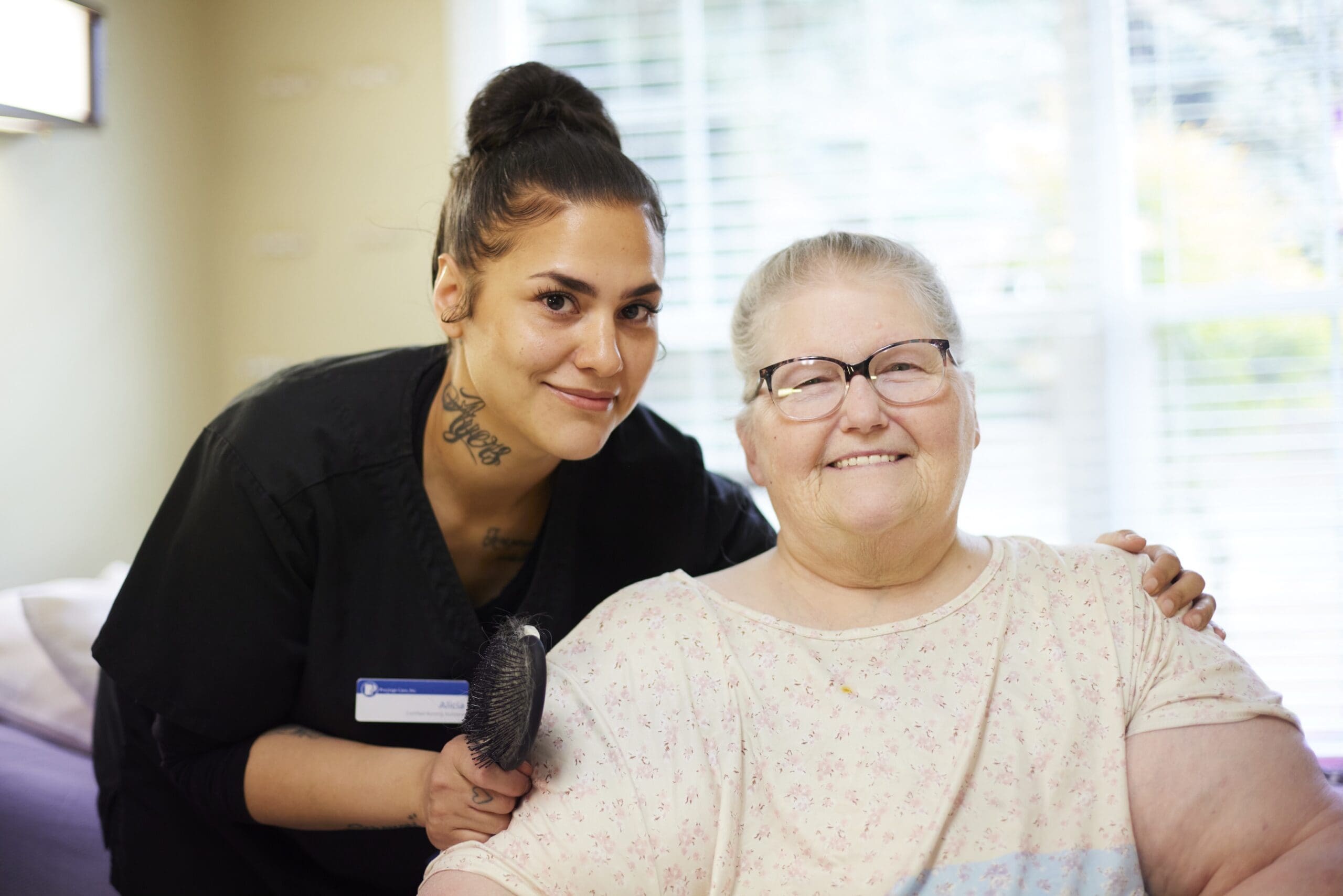
Nursing assistants (NA) provide essential care and support alongside other healthcare professionals. This role takes place in long-term care facilities across Oregon and focuses on daily activities that help clients thrive. It’s more than just a job—it’s a chance to make a real difference in someone’s life while building a meaningful career.
Please review all training and certification requirements before applying.
Key Responsibilities
-
Assist long-term care residents with personal care tasks like bathing, dressing, and grooming
- Ensure residents’ rooms are clean and comfortable
- Prepare residents for social and recreational activities
- Review care plans, including informing nurse supervisors of changes to resident conditions
- Ensure resident safety, dignity, and independence
Opportunities for Advancement
Many nursing assistants choose to grow their careers through further certification and training. From here, you can move into roles like:
- Certified Medication Aide
- Licensed Practical Nurse
Care Pathways helps you map your next step, access free training, and find new opportunities—all with union support along the way.
Typical Wage Range
$20-$26/hr
Nursing assistants trained and hired through Care Pathways receive SEIU 503 union-negotiated wages, benefits, and job protections.
Skills and Qualities
- Compassionate
- Patient
- Flexible
- Comfortable working in a team environment
-
Physically capable of light lifting and moving
-
Respectful of cultural differences and individual preferences
Transferable Skills
Experience caring for family members or in a home care setting can translate well. If you’ve worked in a role that requires attention to detail and working with a team, you’re already halfway there.
Training and Certification
No formal degree is required. You must:
-
- Be 18 years or older
- Have a valid government-issued ID
- Attend in-person classes without missing any portion of the instruction
- Be able to pass a Urinalysis (UA) drug screen
- Live within 50 miles of the instruction location
Training includes hands-on skills and important health and safety practices.